

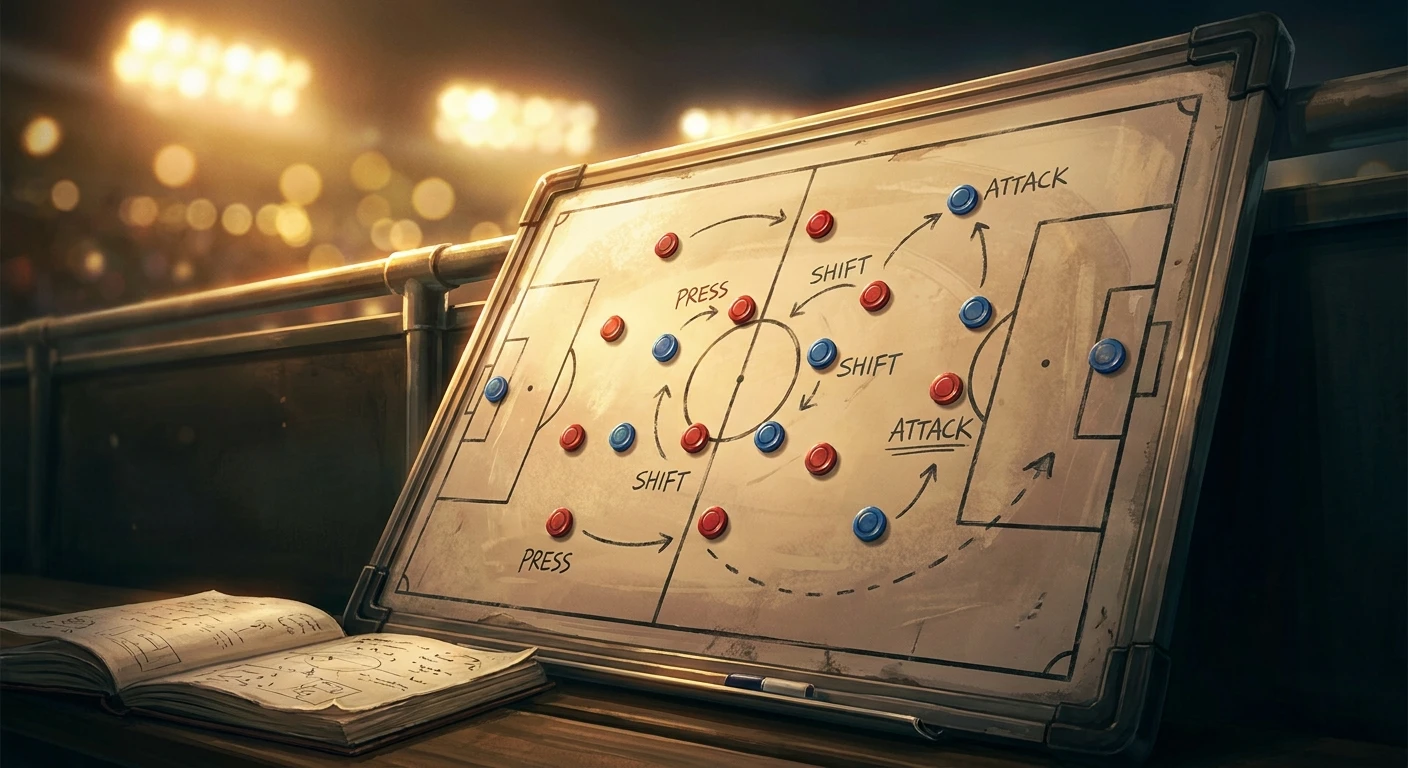
Tactical Breakdown: Everton F.C. (Women) vs Arsenal W.F.C. Lineups
You know the feeling right before kickoff. The team sheets drop, and suddenly, the whole tactical picture snaps into focus. When you look at the Everton F.C. (Women) vs Arsenal W.F.C. lineups, you immediately see a fascinating clash of footballing philosophies playing out on paper. The Women’s Super League demands absolute precision, and the starting eleven selected by each manager dictates the entire tempo of the ninety minutes. Arsenal typically stacks their roster with high-profile international talent, looking to dominate possession and pin opponents deep into their own half. On the flip side, Everton builds their strategy around immense defensive resilience, rapid transitions, and calculated counter-attacks that can punish any team caught out of position.
Understanding these starting formations goes far beyond just knowing who is on the pitch. It is about recognizing the specific roles assigned to each player, the tactical traps set up in the midfield, and the strategic adaptations made to exploit the opposition’s weaknesses. Matchdays featuring these two clubs consistently deliver immense strategic depth, as both coaching staffs constantly tweak their shapes to gain even the slightest advantage. By dissecting the names and formations announced an hour before the whistle, you gain a massive edge in predicting how the match will unfold, where the key battles will occur, and which side holds the ultimate structural superiority.
Read also: FC Barcelona vs Athletic Bilbao Lineups: Tactical Guide; Motherwell F.C. vs Rangers F.C. Lineups: Tactics.
Analyzing the specific player selections and structural decisions provides incredible insight into elite football management. When these two teams face off, the contrast in their approaches creates a highly entertaining dynamic. Arsenal prefers a proactive, suffocating style of play, whereas Everton often relies on a reactive, disciplined framework designed to absorb pressure and strike with lethal efficiency. Below is a detailed breakdown of how these distinct styles typically manifest on the pitch.
| Tactical Element | Arsenal W.F.C. Approach | Everton F.C. (Women) Approach |
|---|---|---|
| Primary Formation | Fluid 4-3-3 or 4-2-3-1 | Structured 5-4-1 or 3-4-3 |
| Defensive Strategy | Aggressive high block, immediate counter-pressing | Disciplined low to mid-block, closing passing lanes |
| Attacking Focus | Overloading wide areas and intricate half-space passing | Exploiting transitions via wing-backs and direct balls |
To fully grasp the magnitude of these tactical battles, you need to understand the immediate benefits of studying the team sheets. Here are the three primary advantages of breaking down the formations before the match begins:
- Predicting the Midfield Supremacy: The midfield is where matches are won and lost. By identifying whether Arsenal has deployed a double pivot or a lone defensive midfielder, you can instantly gauge how much control they intend to exert. Conversely, checking Everton’s central pairings reveals if their goal is to completely stifle the center of the park or attempt to play out from the back.
- Identifying Attacking Width and Wing-Back Roles: Wide areas are crucial in this specific fixture. Arsenal relies heavily on traditional wingers cutting inside, while Everton depends on their wing-backs to provide both defensive cover and sudden attacking width. Knowing exactly who occupies these flanks tells you where the most intense one-on-one battles will happen.
- Spotting Defensive Vulnerabilities: High defensive lines naturally leave space in behind. If Everton starts their fastest forwards, you immediately know they plan to exploit the grass left behind Arsenal’s advancing center-backs. Conversely, if Arsenal starts highly technical, press-resistant defenders, they are preparing to nullify that exact threat.
Origins of the Everton and Arsenal WSL Rivalry
The history of women’s football in England is deeply intertwined with the development of both these historic clubs. The rivalry is built on years of intense competition dating back to the formation of the Women’s Super League and even earlier in the Women’s Premier League National Division. Arsenal historically set the gold standard for domestic success, capturing numerous titles and establishing a culture of absolute dominance. Everton, meanwhile, has always been a fiercely competitive side, constantly challenging the established hierarchy and producing some of the most technically gifted domestic players in the country. Their early encounters were defined by physical battles and sheer determination, laying the groundwork for the highly tactical matchups we witness today.
Evolution of Roster Building
Over the years, the way both clubs construct their squads has shifted dramatically. Arsenal transitioned into a global powerhouse, utilizing extensive scouting networks to attract the finest international stars from across Europe and beyond. Their recruitment focuses on highly technical, versatile athletes capable of executing complex positional play. Everton’s journey has been defined by intelligent rebuilding phases. They have consistently identified undervalued talent, developed elite academy prospects, and recruited smartly from emerging markets to build a cohesive, fiercely loyal squad. This divergence in roster building creates the fascinating contrast in styles that makes their head-to-head encounters so compelling.
Modern State of Their Team Sheets
In the current era of the WSL, the depth of a squad is just as critical as the starting eleven. The introduction of the five-substitute rule fundamentally altered how managers approach these fixtures. Arsenal often boasts a bench filled with game-changers who would seamlessly start for almost any other club in the league. This luxury allows them to relentlessly press for sixty minutes before injecting fresh, world-class legs to finish the job. Everton counters this by building extreme tactical flexibility into their starting lineups. Their players are frequently cross-trained to operate in multiple roles, allowing the manager to shift formations on the fly without making a substitution, thereby keeping Arsenal guessing until the final whistle.
Pressing Metrics and High-Line Dynamics
To truly appreciate the chess match between these squads, you must look at the underlying scientific and technical metrics that define their playstyles. One of the most telling statistics is Passes Per Defensive Action (PPDA). This metric calculates how many passes a team allows the opposition to make before attempting a tackle or interception. Arsenal’s PPDA is consistently among the lowest in the league, reflecting their intense, suffocating high press. They want to win the ball back within seconds of losing it, preferably in the final third. Everton, however, is perfectly comfortable allowing a higher PPDA. They focus on maintaining a compact shape, forcing Arsenal into low-percentage crosses or shots from distance, thereby protecting their expected goals (xG) against.
The Double Pivot vs The Lone Six
The engine room of the pitch is where the technical complexity of modern football shines brightest. Arsenal frequently utilizes a dynamic midfield triangle, sometimes anchored by a lone defensive midfielder (a ‘number six’) to allow two advanced eights to roam the half-spaces. Other times, against aggressive transition teams like Everton, they might deploy a double pivot to provide extra defensive insurance. Here are the core technical realities of their midfield battle:
- Arsenal relies on intricate passing networks to systematically dismantle low blocks, averaging extremely high possession statistics.
- Everton focuses heavily on lateral compactness, ensuring that the distances between their midfielders and defenders remain minimal.
- The utilization of the half-spaces by Arsenal’s attacking midfielders constantly forces Everton’s wing-backs to make incredibly difficult positioning decisions.
- Everton’s transition speed relies heavily on quick, vertical passes bypassing the midfield entirely to exploit Arsenal’s advanced full-backs.
Step 1: Check the Defensive Shapes
The very first thing you should do when the team sheets are released is look at the back lines. Count the number of natural center-backs for Everton. If they list three, you are guaranteed to see a five-back system out of possession. For Arsenal, check if their full-backs are traditionally attacking or more defensively minded, as this indicates how high they plan to push the defensive line.
Step 2: Identify the Midfield Engine Room
Next, scan the midfield personnel. Identify who is tasked with breaking up play and who is responsible for progression. Arsenal’s ability to dictate the game hinges entirely on their central trio. If Everton fields a highly physical midfield pairing, expect a grueling, stop-start battle in the center of the pitch designed to disrupt Arsenal’s rhythm.
Step 3: Look for Wide Overloads
Width is everything in this fixture. Note exactly who Arsenal has stationed on the wings. If they feature inverted wingers, expect them to cut inside and shoot, leaving the flanks open for overlapping full-backs. Everton must counter this by ensuring their wide midfielders drop deep enough to create two-on-one defensive situations.
Step 4: Evaluate Striker Profiles
The type of striker starting completely alters the attacking dynamic. A true target forward requires crosses and hold-up play, whereas a false nine drops deep to link with the midfield. Arsenal’s choice of forward will dictate whether Everton’s center-backs step up to engage or drop deep to protect the penalty area.
Step 5: Assess the Bench Depth
Never ignore the substitutes. Matches in the WSL are frequently decided in the final twenty minutes. Look at the attacking options Arsenal has in reserve. Then, look at the defensive reinforcements Everton has available to hold onto a tight lead or secure a hard-fought draw late in the game.
Step 6: Monitor Weather and Pitch Conditions
While not strictly on the team sheet, the environment plays a massive role in how the lineups perform. A slick, wet pitch heavily favors Arsenal’s rapid passing game. Conversely, a heavy, slow pitch might benefit Everton’s physical, combative approach and disrupt Arsenal’s intricate buildup play.
Step 7: Factor in Recent Fatigue
Finally, consider the context of the schedule. If Arsenal is coming off a grueling European midweek fixture, their manager might heavily rotate the starting eleven. Everton can capitalize on this heavy-leggedness by fielding their highest-stamina players and turning the match into a pure physical contest.
Myth: Arsenal always plays the exact same 4-3-3 formation.
Reality: While the 4-3-3 is their foundational shape, elite managers constantly adapt. Depending on how Everton sets up, Arsenal frequently shifts into a 4-2-3-1 for added defensive stability or even a 3-diamond-3 while in possession to completely overload the central areas and suffocate the opposition.
Myth: Everton just parks the bus against top-tier teams.
Reality: Calling Everton’s approach ‘parking the bus’ entirely dismisses their tactical sophistication. They employ a highly calculated mid-block with specific pressing triggers. They do not just absorb pressure blindly; they actively bait teams into over-committing so they can launch devastating, structured counter-attacks.
Myth: The starting XI determines the final result.
Reality: The starting lineup is merely the opening move in a ninety-minute chess match. With the ability to make five substitutions, managers frequently plan for the finishing eleven to be drastically different from the starting eleven, specifically designing their bench to exploit the fatigue of the opposition in the dying stages.
How often do Arsenal rotate their squad?
Arsenal rotates their squad very frequently, especially when balancing domestic league matches with demanding European cup competitions to prevent player fatigue and injuries.
What formation does Everton usually deploy?
Everton frequently deploys a resilient 5-4-1 or a dynamic 3-4-3 formation, depending entirely on whether they are prioritizing defensive solidity or attacking transitions.
Where can fans find the official lineups?
Official lineups are typically released exactly one hour before kickoff on the clubs’ official social media channels, official websites, and major sports broadcasting applications.
Do injuries heavily impact these fixtures?
Absolutely. The loss of a key central midfielder or a starting center-back forces massive tactical reshuffles, completely altering the pressing structures and defensive solidity of either team.
Who dictates the tempo in this matchup?
Arsenal usually attempts to dictate the tempo through high possession, but Everton can successfully disrupt that rhythm by slowing down restarts and executing aggressive, physical tackles.
How do wing-backs change the game?
Wing-backs provide the ultimate tactical flexibility, allowing a team to defend with a flat back five while out of possession and instantly transition into a three-man attack when they win the ball.
Does the home advantage alter the team sheet?
Yes, the home team often fields a slightly more aggressive, attack-minded starting eleven to capitalize on the energy of the crowd and establish early dominance on the pitch.
Understanding the intricacies of the team sheets transforms how you watch the game. By analyzing the structural matchups, you can predict the flow of play long before the referee blows the whistle. Whether you support the relentless possession of the Gunners or the gritty resilience of the Toffees, knowing the tactics enhances every single pass. Drop a comment below and let us know which player you think is absolutely crucial for your team’s starting lineup!











Leave a Reply