


Decoding the Tactics Behind Genoa CFC vs Atalanta BC Lineups
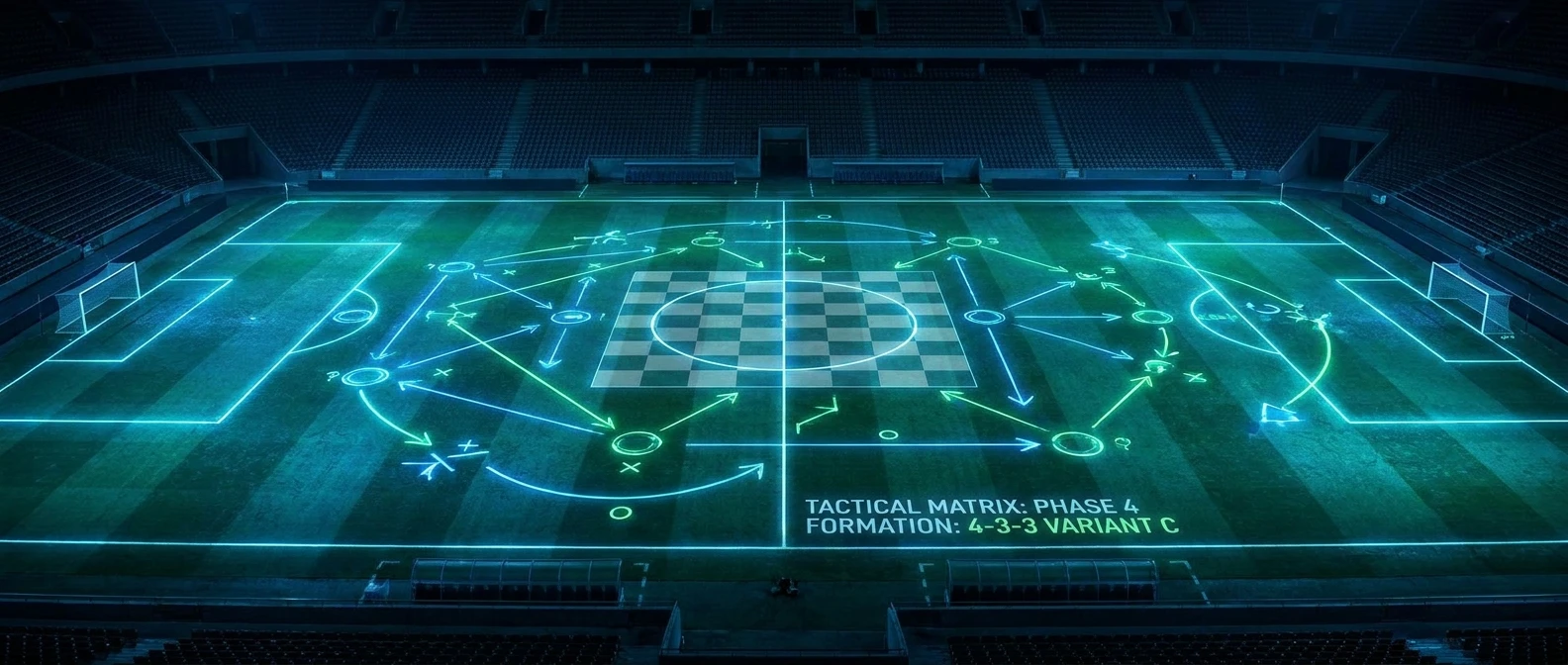
When the team sheets drop and we see the official Genoa CFC vs Atalanta BC lineups, football purists immediately start deciphering the tactical chess match ahead. Analyzing these starting elevens offers a masterclass in Italian football strategy. Rather than just a list of names, a starting roster acts as a geographical map of intent, revealing exactly how a manager plans to exploit the opposition’s weaknesses while protecting their own defensive third. You can tell within seconds whether a coach is playing for a conservative draw or an aggressive, high-scoring victory. The tactical battle between these two historic clubs always delivers intense midfield struggles, wide-area overloads, and fascinating defensive shapes. Understanding the nuances of these formations allows you to watch the game with an entirely new level of appreciation, spotting off-the-ball movements and strategic traps that the casual observer completely misses. We will break down every structural component, historical connection, and technical metric that defines these clashes, ensuring you know exactly what to look for before the referee blows the opening whistle.
Strategic Core: Formations and Key Roles
To fully grasp the magnitude of the starting elevens, you need to understand the underlying systems these clubs deploy. Atalanta traditionally operates within a highly aggressive 3-4-2-1 or 3-4-3 framework, relying heavily on man-to-man pressing across the entire pitch. Genoa, depending on their managerial helm, often shifts between a robust 3-5-2 and a solid 4-4-2 block, prioritizing defensive solidity and rapid counter-attacks. When analyzing the shapes, you immediately notice the contrast in philosophies. One team seeks to suffocate the opponent through relentless ball recovery, while the other aims to absorb pressure and strike into vacated spaces.
Read also: Motherwell F.C. vs Rangers F.C. Lineups: Tactics; Tactics Guide: Atalanta BC vs U.S. Lecce Lineups Explained.
| Tactical Aspect | Atalanta BC Setup | Genoa CFC Setup |
|---|---|---|
| Defensive Structure | High line, aggressive man-to-man coverage, three center-backs. | Deep block, zonal marking, compact central defense. |
| Midfield Engine | Dynamic double pivot, wing-backs acting as primary playmakers. | Trio of central midfielders, prioritizing shape and interception. |
| Attacking Threat | Fluid front three, constant positional rotation, high shot volume. | Direct target men, quick transitions, reliance on set pieces. |
A prime example of this value proposition occurs when a manager makes a tactical substitution. If Atalanta introduces a fresh, pacey wing-back in the 65th minute, their entire attacking width changes, forcing Genoa’s defensive block to stretch. Conversely, if Genoa brings on an extra holding midfielder, they are signaling a desire to lock down the center and force their opponents into predictable, low-percentage crosses. To correctly interpret the initial roster, follow this sequence:
- Identify the defensive formation: Check if the team is fielding three or four natural center-backs to gauge their baseline defensive width.
- Analyze the midfield configuration: Look at the balance between defensive destroyers and creative playmakers in the central zones.
- Assess the forward line: Determine whether the strikers are physical target men meant for hold-up play or agile forwards designed to run behind the defense.
Origins of the Managerial Philosophies
The roots of this specific tactical rivalry run incredibly deep, heavily intertwined with the managerial history of Gian Piero Gasperini. Long before he turned Atalanta into a European powerhouse, Gasperini enjoyed highly successful spells at Genoa. During his time in Liguria, he perfected the foundations of his trademark 3-4-3 system, a setup that was highly unconventional in a league heavily dominated by four-at-the-back systems. His approach prioritized high-intensity running, numerical superiority on the flanks, and a brave, high defensive line. Those early years laid the groundwork for a tactical revolution in Serie A.
Evolution of the Defensive Shapes
As football evolved, so did the interpretations of these formations. Initially, a three-man defense was viewed globally as a conservative, safety-first approach. However, the evolution of the wing-back role changed the paradigm completely. Players occupying the wide roles began acting as auxiliary wingers, pushing high up the pitch during possession and pinning the opposition’s full-backs deep in their own half. Genoa has experienced several iterations of this evolution, sometimes adopting the very systems their former manager popularized, while at other times reverting to rigid, traditional zonal blocks to counteract the modern pressing game.
Modern State of the Tactical Rivalry
Today, the matchup represents a clash between established European intensity and pragmatic resilience. When the starting elevens are announced, analysts immediately look for the specific personnel tasked with controlling the half-spaces—the vertical strips of the pitch between the wing and the center. The modern state of this fixture hinges on which side can dictate the tempo. If the Bergamo-based side successfully establishes their high press, the game becomes a frantic, high-octane affair. If the Ligurians successfully disrupt the rhythm with disciplined positioning and tactical fouls, the match slows down into a gritty, calculated war of attrition.
The Science of High Pressing
To truly understand the tactical gravity of the starting elevens, one must look at the underlying scientific and data-driven metrics that define modern football analysis. Concepts like Passes Allowed Per Defensive Action (PPDA) and Expected Goals (xG) offer empirical evidence of how a formation is functioning. When a team deploys a high-pressing 3-4-2-1, their PPDA will typically be very low, indicating that they allow the opponent very few passes before attempting a tackle or interception. This requires elite physical conditioning and supreme tactical intelligence from the players selected in the starting lineup.
Data and Technical Metrics
Managers use sophisticated GPS tracking and historical data to select the perfect eleven for these encounters. They look at sprint distances, recovery speeds, and spatial mapping to determine which players can handle the intense man-to-man demands. Here are the key technical facts analysts monitor when the team sheet is released:
- Field Tilt: Measures the territorial dominance by calculating the share of final-third passes each team completes.
- Asymmetric Overloads: Pushing more players to one specific side of the pitch to drag the opponent’s defensive block out of alignment.
- Rest Defense: The structural positioning of the defenders and defensive midfielders while their own team has possession, designed to prevent counter-attacks.
- Expected Threat (xT): A metric evaluating how much a player’s passes and dribbles increase the team’s probability of scoring.
Step 1: Analyzing the Pre-Match Press Conferences
The buildup to matchday begins long before kickoff. Tracking manager press conferences provides vital clues regarding injuries, tactical shifts, and overall team morale. Managers rarely give away their exact plans, but they often hint at defensive strategies or praise specific youth players who might earn a surprise start.
Step 2: Monitoring Mid-Week Training and Fitness
Keeping an eye on training reports helps identify which players are carrying minor knocks. In a physically demanding system, a player operating at ninety percent fitness is a massive liability. Monitoring these reports allows you to predict rotational changes before the official announcement.
Step 3: Reviewing the Predicted Tactical Shapes
Sports journalists and analysts release predicted lineups in the days leading up to the match. Comparing these predictions against historical data helps you form a baseline expectation of how the teams will structurally align against one another.
Step 4: Decoding the Official Roster Drop
Exactly one hour before kickoff, the official lists are released. This is the moment to compare the actual eleven against your baseline expectations. Spotting a surprise inclusion—like a defensive midfielder playing at center-back—instantly alerts you to a specific tactical adjustment.
Step 5: Observing the Pre-Game Warmups
Watching the warmups provides visual confirmation of the anticipated shape. Teams run through passing drills that mirror their intended matchday structure. Observing these routines helps confirm whether a team is genuinely playing a back three or a back four.
Step 6: Watching the First Fifteen Minutes
The opening stages of the match confirm all tactical theories. Notice where the defensive line sits, how aggressively the midfielders press, and whether the forwards are dropping deep to receive the ball or staying high to stretch the defense.
Step 7: Identifying Second-Half Substitutions
Match analysis does not end at kickoff. The substitutions made between the 60th and 75th minutes offer a secondary tactical layer. Analyzing who comes off and who goes on reveals whether a manager is securing a point or risking everything for a win.
Common Tactical Myths Debunked
Myth: Playing three at the back is inherently a defensive strategy meant to limit the opponent’s scoring chances. Reality: In modern setups, a three-man defense is often used to push wing-backs higher up the pitch, creating an overwhelming five-man attacking line in possession. Myth: The formation on paper dictates exactly where players will stand for ninety minutes. Reality: Modern formations are incredibly fluid; a team might defend in a 5-3-2 but attack in a sprawling 3-2-5. Myth: Central midfielders only operate in the middle of the pitch. Reality: Elite tactical systems frequently require central midfielders to drift into wide channels to create numerical overloads against isolated full-backs.
Where can I find official starting XIs?
Official rosters are released exactly sixty minutes before kickoff on the clubs’ official social media channels and league websites.
Why do managers hide their plans?
Keeping the starting eleven a secret prevents the opposition from conducting targeted tactical preparation and practicing specific set-piece routines against certain personnel.
How often do these teams rotate?
Rotation depends heavily on the schedule. Teams competing in European tournaments will rotate their squads significantly more often to manage player fatigue.
What role do wing-backs play?
Wing-backs are the vital engines of a 3-4-3 or 3-5-2, tasked with providing total wide coverage, contributing to attacks, and rushing back to form a back five defensively.
Can weather impact the choices?
Yes. Heavy rain often leads managers to select taller, more physical players suited for aerial duels and direct long-ball tactics.
Do youth players get a chance?
Both clubs have renowned academies and frequently integrate young talent into the starting eleven, especially during injury crises or congested fixture periods.
How do suspensions alter the game?
A suspended key player forces a manager to either slot a lesser-experienced backup into the exact same role or completely change the formation to compensate for the missing skill set.
Understanding the intricacies behind the Genoa CFC vs Atalanta BC lineups transforms a standard football match into a captivating display of strategic intelligence. By analyzing formations, recognizing historical patterns, and tracking technical metrics, you elevate your appreciation of the beautiful game. Keep this tactical guide handy for the next clash, and enjoy watching the strategic masterclass unfold on the pitch.











Leave a Reply